
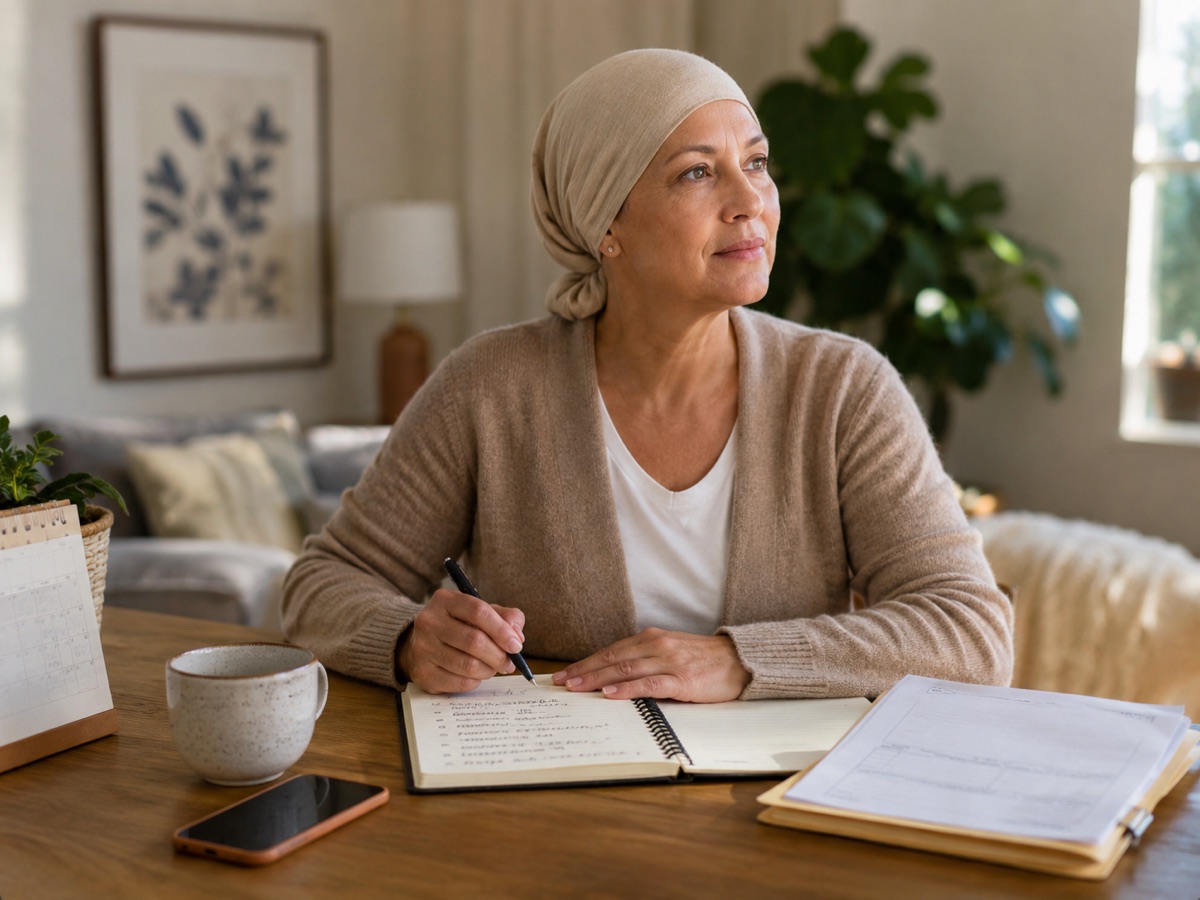
The best questions to ask your oncologist after treatment ends cover four areas: your follow-up and monitoring schedule, the late effects to watch for, what you can do to support recovery, and who to contact between visits. When active treatment wraps up, appointments become shorter and further apart — so walking in with a focused, prioritized list of questions is the single best way to make each visit count.
The end of treatment is a major transition. The intensive schedule lifts, and many survivors are left wondering what happens next in their life after cancer. Your oncologist holds the answers to a lot of those questions, but follow-up time is limited. A clear list of questions — written down in advance and ordered by what matters most — helps you leave with a plan instead of a list of things you forgot to ask.
The questions below are organized by theme so you can pick the ones that fit your situation. You will rarely need to ask all of them at a single visit, and you do not have to. Think of them as a menu: choose the handful that address what is most on your mind right now, and save the rest for future appointments as new questions surface.
What should you ask about follow-up and monitoring?
Understanding your follow-up plan is the foundation of survivorship. It tells you what to expect and reduces the uncertainty that fuels anxiety. Consider asking:
- What is my follow-up schedule, and what will each visit cover?
- What surveillance or tests will I have, and how often?
- How will we know if anything changes, and what happens then?
- Who do I contact between visits if something comes up?
The answers form the backbone of your survivorship care plan, which records your treatment history alongside the road ahead.
What late and long-term effects should you ask about?
Some effects of treatment continue after it ends, and others can appear months or even years later. Knowing which ones are relevant to your treatment helps you stay aware without scanning yourself for problems. Ask:
- What late or long-term effects should I look out for, given my specific treatment?
- Which symptoms are expected during recovery, and which should prompt a call?
- Is the fatigue or trouble with sleep I am experiencing typical at this stage?
- If I am on hormone therapy, what side effects should I expect, and how can we manage them?
What can you ask about healthy living and recovery?
Survivorship is also about what you can do for yourself. Your oncologist can help you focus your energy on the changes that matter most for your situation:
- What can I do to support my recovery and lower my risk?
- Are there activities, foods, or habits I should adjust or prioritize?
- When is it safe to start or increase exercise after treatment?
- Would a referral to a dietitian, physical therapist, or counselor help me?
What should you ask about your records and care team?
As you move into survivorship, it helps to leave with the right paperwork and a clear sense of who handles what. These logistical questions are easy to overlook but make a real difference later:
- Can I have a written treatment summary and a survivorship care plan?
- Which parts of my follow-up care will you handle, and which will move to my primary care doctor?
- How do I get copies of my records if I move or see a new provider?
- Are there any genetic, family, or screening implications I should understand?
What should you ask about emotional wellbeing?
Emotional health is a core part of survivorship, not an afterthought. Many survivors feel anxious once the safety net of active treatment lifts. It is worth raising directly:
- It is common to worry about cancer returning — how do you suggest I cope with fear of recurrence?
- Are the memory slips or trouble concentrating I have noticed, sometimes called chemo brain, expected?
- What support is available if I am struggling emotionally?
How do you make a follow-up visit count?
Even the best questions only help if you can ask and remember them. A few habits make a big difference:
- Prioritize. Put your top three to five questions at the top — you may not get to all of them.
- Bring a summary. A short note of what has changed since your last visit keeps the conversation focused.
- Write down the answers, or bring someone to take notes with you.
- Confirm the plan before you leave, so you both heard the same thing.
- Ask follow-up questions. If an answer is unclear, it is completely reasonable to ask your oncologist to explain it in plainer terms or to repeat it.
It also helps to remember that no question is too small. Survivors sometimes hold back questions that feel minor or worry about taking up time, but the things that nag at you are exactly what follow-up visits are for. Bringing them into the open is how you stay informed and reduce uncertainty.
Our guide on preparing for a survivorship appointment walks through this preparation in more detail, and if you are heading back to your job, returning to work after cancer covers the questions worth raising there too.
How Oncera helps you ask better questions
It can be hard to know which questions matter most when you are in the room. Oncera is a research-grounded survivorship platform that organizes hundreds of survivorship signals into clear focus areas across seven domains, tracks how you are feeling over time, and turns those patterns into a focused, doctor-ready summary and questions for each visit. You can start with a one-time survivorship snapshot to walk in prepared. Oncera is educational and non-diagnostic, and it complements — never replaces — your care team.
This article is general educational guidance and is not medical advice. Bring your questions and any concerns directly to your own oncologist and care team.