
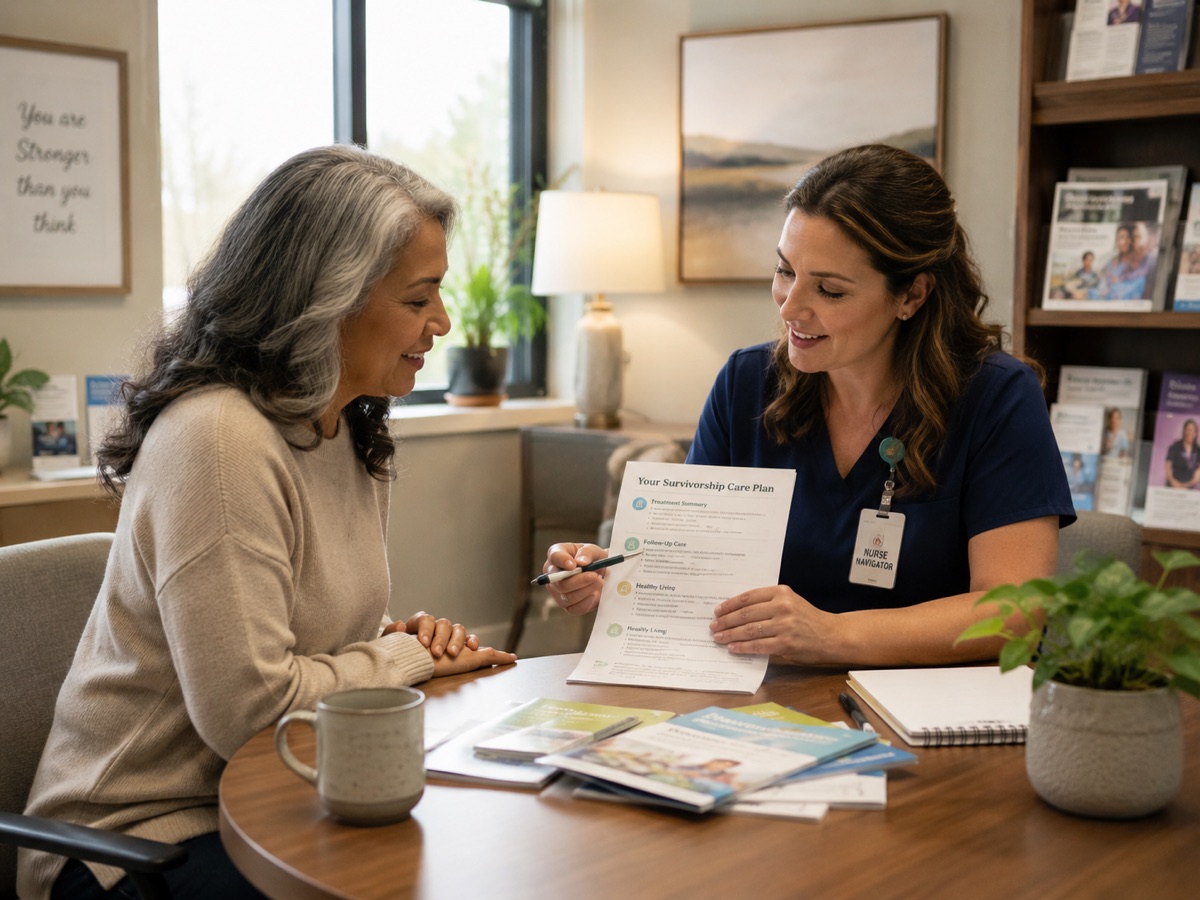
A survivorship care plan is a written document that combines a summary of the cancer treatment you received with a forward-looking plan for follow-up, healthy habits, and the symptoms to watch for. It is one of the most practical tools for navigating life after cancer treatment, because it replaces an open-ended, uncertain phase with a clear, personalized roadmap you can actually act on.
When active treatment ends, the tightly coordinated schedule of appointments, scans, and clinician contact tends to fall away. Many survivors describe this moment as stepping off a map. A survivorship care plan is the map. It captures what happened during treatment, spells out what comes next, and tells you who to call for what — so the question "what now?" has an answer you can return to again and again.
What is a survivorship care plan?
At its core, a survivorship care plan is two things in one document: a treatment summary that records what you have already been through, and a follow-up plan that maps the road ahead. Leading cancer organizations recommend that survivors leave active treatment with this kind of written summary, ideally created together with the care team. It is not a static form to file away — it is a living reference you bring to appointments and update as your situation changes.
What does a survivorship care plan include?
A useful care plan usually covers:
- Treatment summary — your cancer type, the treatments you received (surgery, chemotherapy, radiation, hormone therapy, and others), and key dates.
- Follow-up schedule — upcoming appointments, surveillance, and tests, along with how often each is needed.
- What to watch for — possible late and long-term effects relevant to your treatment, and which symptoms should prompt a call.
- Healthy-living goals — small, sustainable steps across movement, nutrition, sleep, and emotional wellbeing.
- Your care team — who is responsible for what, and who to contact between visits.
Together, these pieces translate a complex treatment history into something you and any future clinician can understand at a glance.
How do you build a survivorship care plan?
You do not have to build it alone — and you should not try to. Your care team is the best source for the treatment summary and the follow-up schedule, since they hold the clinical detail. The most effective approach is to ask for what you need, organize it in one place, and keep it close. You will find a clear, step-by-step checklist below that walks through gathering your treatment summary, mapping your follow-up schedule, listing what to watch for, setting healthy-living goals, and keeping the plan with you.
As you build it, think of the plan as a conversation starter rather than a finished product. The first version does not need to be perfect. What matters is that you have a written reference you can bring to your next visit, refine over time, and lean on when questions surface between appointments.
Who creates a survivorship care plan?
Ideally, your oncology team prepares or co-creates the plan as you transition out of active treatment. In practice, not every clinic offers one automatically, and survivors often have to ask. That is completely reasonable — requesting a written treatment summary and follow-up plan is a normal part of survivorship care. If your team does not have a formal template, you can still assemble the key pieces yourself with their input. Our guide on questions to ask your oncologist after treatment ends can help you gather the details you need, and the guide to preparing for a survivorship appointment shows how to make that conversation productive.
How do you keep a survivorship care plan useful over time?
A care plan is most valuable when it stays current. Treatments change, new effects can appear, and your follow-up schedule evolves as you move further from active treatment. Plan to review and update your document at each major visit and whenever something meaningful shifts. A few habits keep it alive rather than gathering dust:
- Bring it to every appointment so you and your clinician are working from the same picture.
- Update it after each visit with any changes to your schedule, medications, or what to watch for.
- Keep a copy where you can find it — printed, in a health app, or both — so it travels with you.
- Share it with new providers, including your primary care doctor, so survivorship care is coordinated.
This is especially helpful as some of your follow-up care shifts from your oncology team to primary care over the years. A clear, portable plan makes those handoffs smoother and keeps important details from getting lost.
Why does a survivorship care plan matter?
A care plan matters because it turns an uncertain phase into something structured and actionable. It helps you remember what to monitor, reduces the anxiety of not knowing what is normal, and ensures continuity if you move, change clinicians, or see a new provider years later. It can also ease fear of recurrence by giving you a concrete plan for follow-up rather than a vague sense of waiting. And when you return to everyday life — including going back to work — a clear plan helps you pace yourself around appointments and recovery.
How Oncera complements your care plan
A survivorship care plan tells you what to monitor; Oncera helps you actually do the monitoring between visits. Oncera is a research-grounded survivorship platform that organizes hundreds of survivorship signals into clear focus areas across seven domains — physical health, emotional wellbeing, sleep, nutrition, hormone therapy, and more — and tracks them over time. It surfaces doctor-ready questions and a focused summary for each appointment, so your care plan stays a living tool rather than a document in a drawer. You can start with a one-time survivorship snapshot to see where you stand today. Oncera is educational and non-diagnostic, and it complements — never replaces — your care team.
This article is general educational guidance and is not medical advice. Build and update your survivorship care plan together with your own care team, and follow their recommendations.